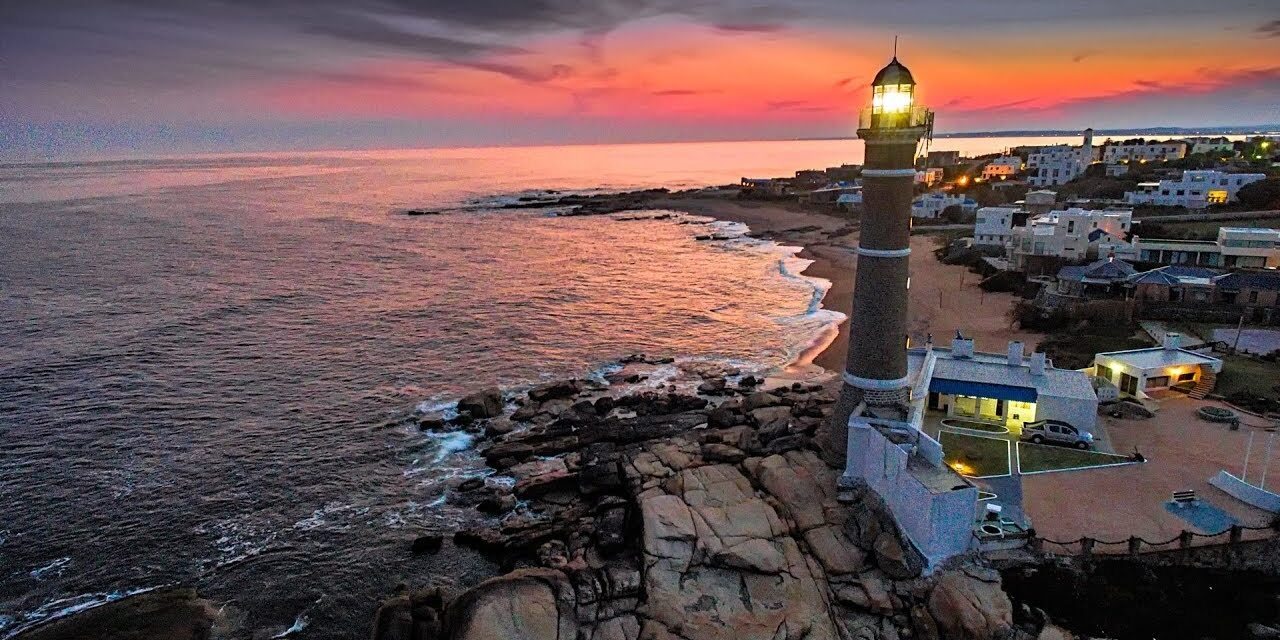
Invest and live in José Ignacio, with income in dollars.
Property in Uruguay's most low-key luxury beach village, for international buyers who want to preserve capital, earn in USD and settle under a straightforward tax regime. End to end: the home, legal residency, tax residency and Uruguayan citizenship.
A predictable country wrapped around a scarce village
Stable institutions, a property market priced in dollars, and building rules that keep José Ignacio low and low-density. That combination, not volume, is what holds value here.
Foreign buyers are equal buyers
No nationality restriction, no acquisition quota, no requirement to hold residency before you close.
Priced in dollars
Asking prices, rents and deeds are denominated in USD, so the asset sits outside regional currency cycles.
A short, intense season
January to March carry the international crowd and most of the rental income. National arrivals in 2026: {{ VERIFICAR }} (Informe Ceres).
A quick closing
Reservation to deed usually runs 30 to 60 days, with no Uruguayan ID card and no local bank account required.
Supply capped by design
Height and density are limited by regulation: houses, chacras and land rather than towers. Current inventory: {{ VERIFICAR }}.
Institutional money nearby
JHSF (Fasano Península) and Cipriani have repositioned the Punta del Este–José Ignacio corridor as an international luxury destination.
Two regimes that can be used together
The impatriate regime deals with your foreign personal income; the Vivienda Promovida law deals with what the property earns.
Impatriate regime
Becoming a Uruguayan tax resident from 2026 lets you elect not to be taxed on foreign-source income for 11 fiscal years.
- Option A: IRNR on foreign income at a reduced burden
- Option B: a fixed annual amount of USD 212,000 to USD 318,000
- The election renews yearly for up to 20 fiscal years
- Compatible with the property route from USD 2,000,000 (UI 12,500,000)
Law 18.795 — Vivienda Promovida
ANV-certified projects come with a defined exemption package for the investor.
- IRPF/IRAE on rental income: exempt for 10 years
- Net wealth tax: exempt for 10 years
- ITP transfer tax: exempt on the first sale
- VAT: exempt on the project's construction and services
In a promoted unit, net USD income sits close to gross for a full decade. Promoted projects currently available in José Ignacio: {{ VERIFICAR }}. This is a summary, not tax advice; every case is confirmed with a Uruguayan accountant and your own.
From La Brava to José Ignacio
Playa Brava — La Barra — Manantiales — José Ignacio is where international demand concentrates. José Ignacio is its quietest end: 35 km from Punta del Este, 1h30–2h from Montevideo.
| Area | USD/m² | Profile |
|---|---|---|
| Playa Brava — beachfront | {{ VERIFICAR }} | Sea views and full building services. |
| La Barra | {{ VERIFICAR }} | Modern product, younger crowd. |
| Manantiales | {{ VERIFICAR }} | Fastest-moving stretch of the corridor. |
| José Ignacio — land | {{ VERIFICAR }} | Premium houses, low density. |
| José Ignacio — built houses | {{ VERIFICAR }} | Thin supply, negotiated case by case. |
We do not publish price ranges or appreciation forecasts without a verifiable source. Figures are re-checked before every update of this site.
Dollar income, concentrated in one season
In José Ignacio rental income comes from a handful of very high-rate weeks rather than year-round occupancy.
3 months
Peak season
January to March carry the premium rental income.
{{ VERIFICAR }}
Gross annual USD yield
Published only from real contracts in our own portfolio.
{{ VERIFICAR }}
Years to payback
Varies widely between land, finished houses and promoted units.
The JHSF case and what it says about the corridor
Brazilian group JHSF bought the historic Enjoy Punta del Este hotel and casino for USD 160 million and announced up to USD 500 million more to reposition it as Fasano Península.
It matters here because José Ignacio is the most exclusive end of that same corridor: when institutional capital validates the region, local scarcity counts for more.
- USD 660 million committed over a four-to-five-year horizon
- More than a thousand jobs preserved
- Refurbished hotel and casino due to operate in December 2026
- Cipriani advancing in parallel with its own residences on the coast road
How a foreign buyer closes here
No prior residency, no Uruguayan ID card, no local bank account. Thirty to sixty days from reservation to title in your name.
Reservation agreement
Signed before a notary, setting price, payment terms and the deed date. A 10% deposit is standard.
Title search
The buyer's notary confirms the property is free of debt, liens and litigation. Notarial involvement is mandatory in Uruguay. Usually 20 to 30 days.
Deed of sale
Balance paid, title transferred and registered with the Property Registry.
Paperwork
Valid passport, bank evidence of the source of funds and a home address abroad.
Costs to budget
- Notary fees: 3% + VAT on the purchase price
- ITP transfer tax: 2% of cadastral value, exempt under Vivienda Promovida
- Agency commission: 3% + VAT. In Uruguay both buyer and seller pay commission
Properties in José Ignacio
A short, current list. Every listing is verified before it is published here.
Worth reading before you sign
Three short reads on investing, tax residency and the buying process in Uruguay.
Knowing the place before you buy
Beaches, restaurants, where to stay and the practical details of daily life on this stretch of coast.
Things to do in José Ignacio
What there is to do here, in and out of season.
Where to eat in José Ignacio
Restaurants and places to eat along this coast.
Where to stay in José Ignacio
Hotels, posadas and places to stay while you look around.
Grocery stores
Where to buy food and supplies in and around José Ignacio.
Useful information
Practical details for a first stay: services, seasons and everyday logistics.
What international buyers ask first
Straight answers on buying in José Ignacio, Uruguayan taxes and the closing process.
- Can a foreigner buy property in José Ignacio?
- Yes, on the same terms as a Uruguayan. There is no nationality quota and no prior-residency requirement, and every sale goes through a notary and the Property Registry.
- What does a house in José Ignacio cost?
- It depends on the plot, the built area and the distance to the water, and supply is thin. Instead of a generic range we send real figures for what is available when you ask. {{ VERIFICAR }}
- Which taxes and costs apply to the purchase?
- Notary fees of 3% + VAT, ITP of 2% of cadastral value (exempt under Vivienda Promovida) and agency commission of 3% + VAT per side.
- Do I need residency to buy?
- No. You can buy as a non-resident with a passport and evidence of the source of funds. Residency is a separate track that makes sense if you also want the tax effect.
- How much has the area appreciated?
- We only publish price series with a dated, verifiable source. Until we have one specific to José Ignacio, we will not quote a percentage. {{ VERIFICAR }}
- How does Uruguayan tax residency work?
- Anyone obtaining it from 2026 can elect the impatriate regime and leave foreign-source income untaxed for 11 fiscal years, choosing between reduced IRNR or a fixed annual amount. Your own case needs an accountant on both sides.
Tell us what you are looking for
You get real available properties, closed cost figures and the tax structure that fits your situation.
- A read on your goal: own use, seasonal rental or store of value
- A shortlist of matching properties with checked numbers
- Tax structuring with Uruguayan specialists
- A dedicated notary and legal support through closing and after